Wine Labels
Wine labels sized for a standard bottle, in the materials and finishes wineries actually use — configure yours and see a real price below.
Shown below is a common starting configuration for wine labels — change anything to match your bottle.
Rectangle · 2" × 3" · Semi-Gloss · Qty 1,000
Choosing the right material for wine labels
Everyday & Durable
Crystal Clear
A transparent film that lets the wine's own color and the glass show through — the “no-label label” look many boutique and premium bottlings reach for.
More on Crystal Clear →Matte PVC
A white synthetic stock with a naturally matte, low-sheen surface. A classic, understated look for wine branding.
More on Matte PVC →Semi-Gloss Paper
Our most versatile everyday stock, with balanced sheen and reliable color reproduction for detailed or vintage-style label artwork.
More on Semi-Gloss Paper →Textured & Premium Papers
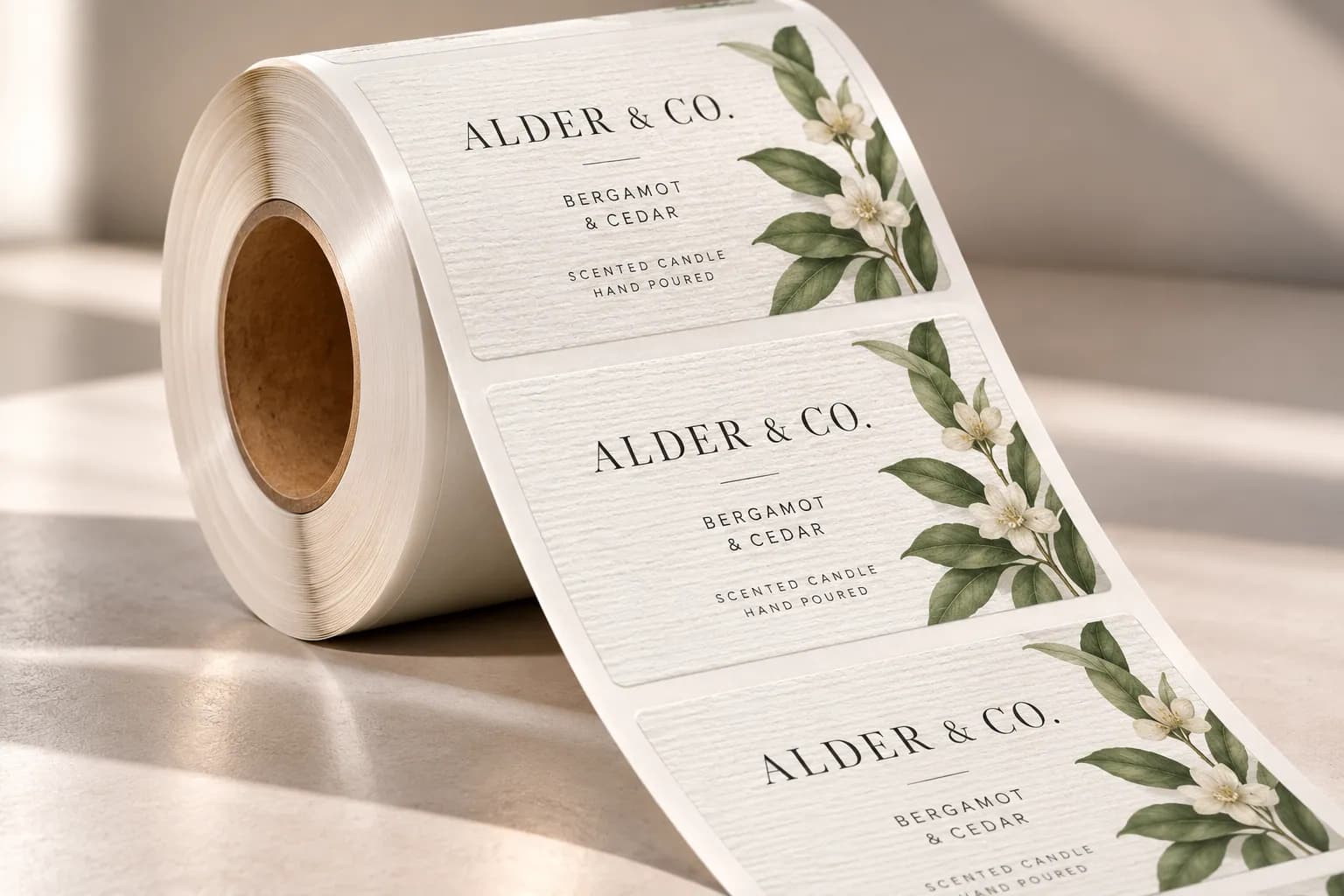
Estate #4 Paper
White · Laid
A traditional textured white paper with a tactile, premium feel.
More on Estate #4 Paper →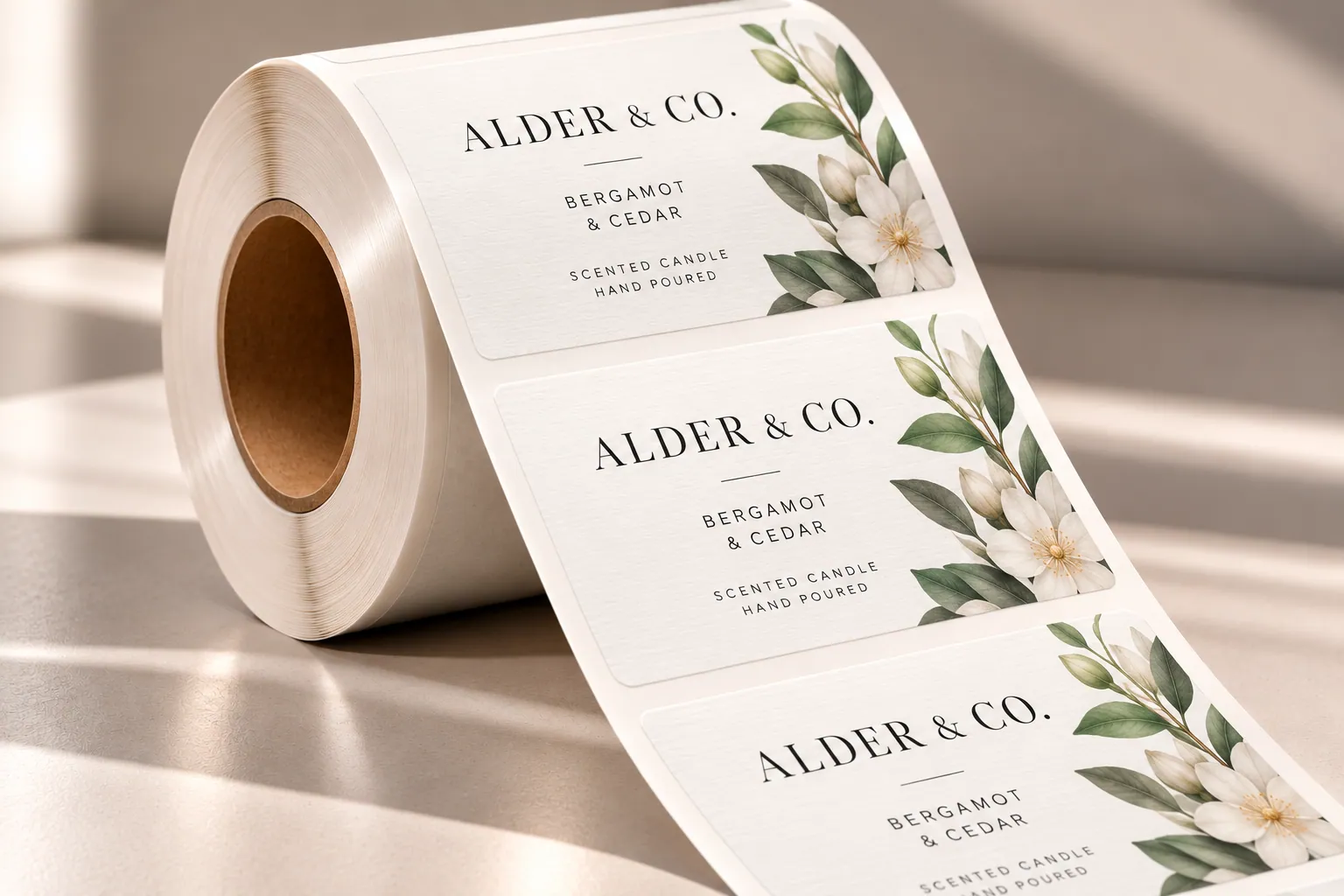
Estate #8 Paper
Bright White · Vellum
A bright white vellum paper with the cleanest look of the three Estate papers.
More on Estate #8 Paper →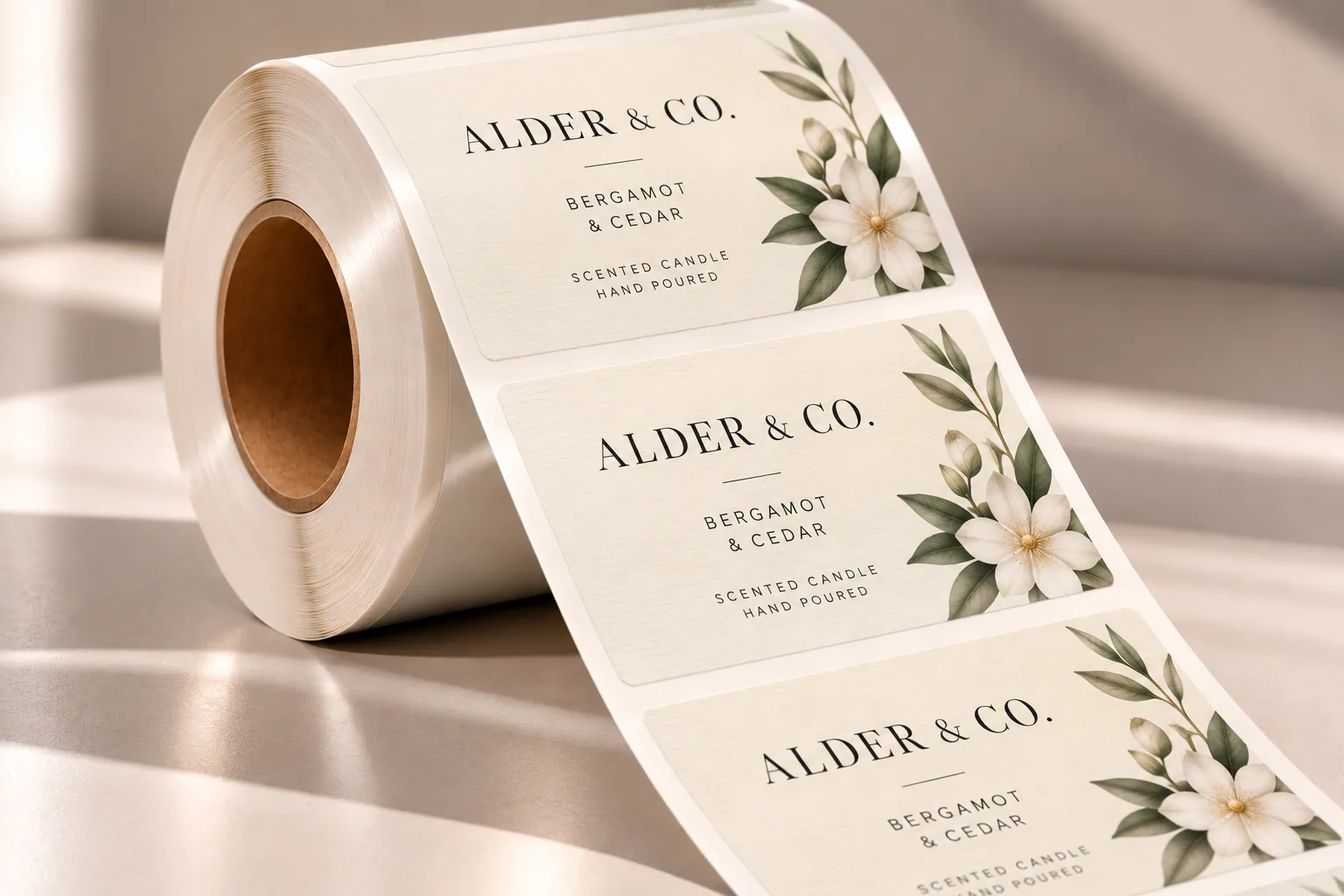
Estate #9 Paper
Cream · Laid
A warm cream paper with a classic laid texture and softer, natural look.
More on Estate #9 Paper →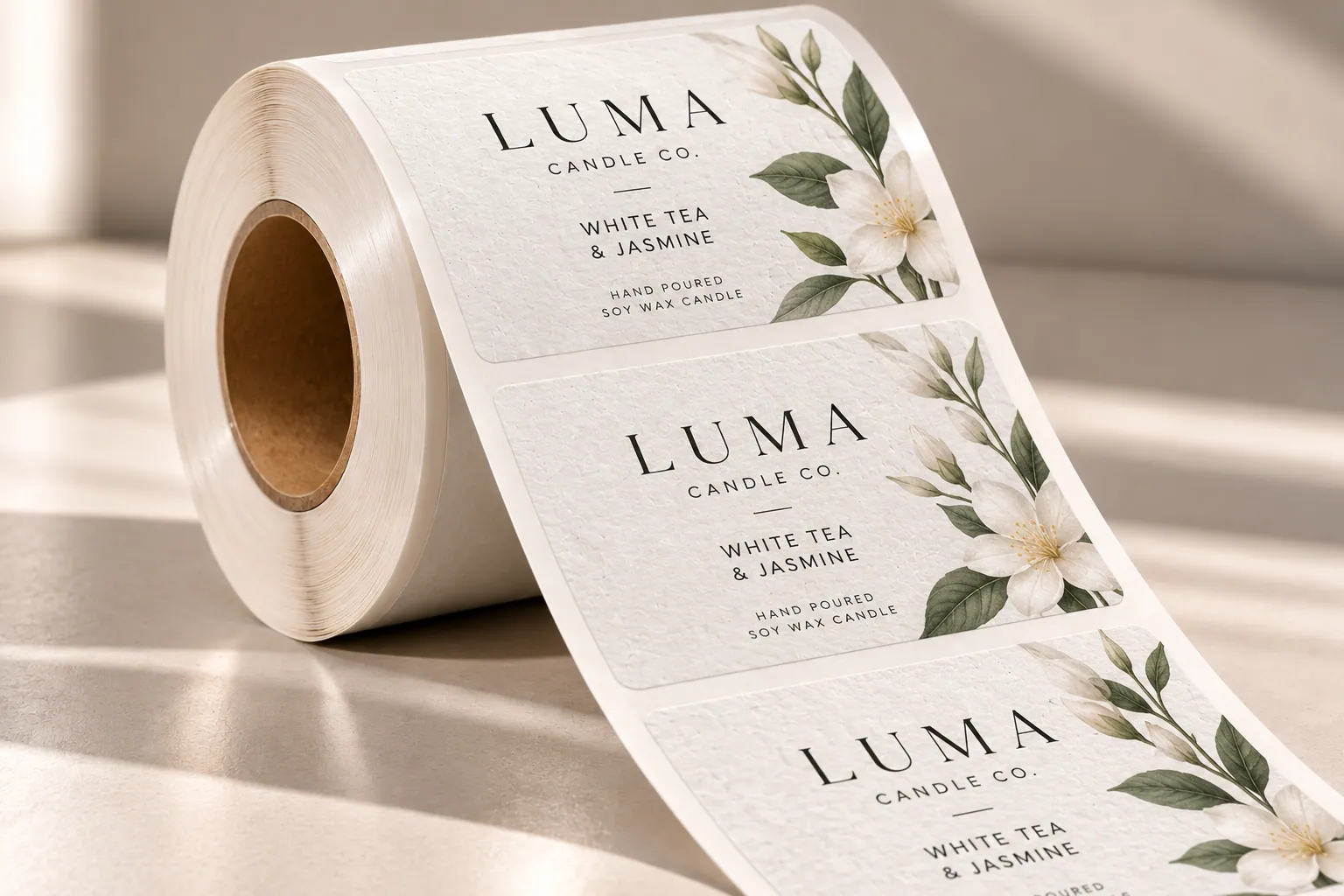
Eggshell Felt White
White · Eggshell/Felt
A crisp white paper with a tactile eggshell/felt surface you can see and feel.
More on Eggshell Felt White →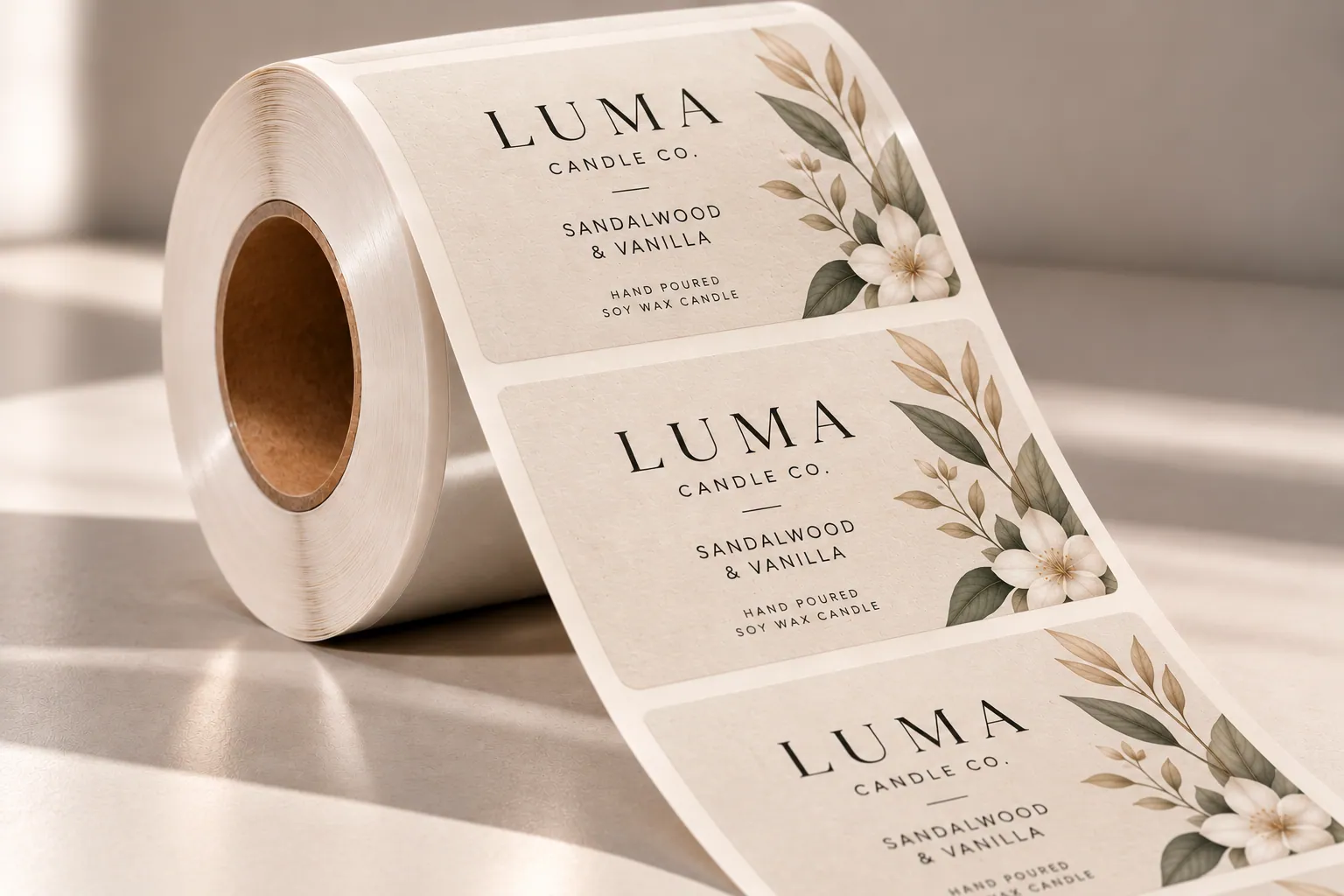
Eggshell Felt Beige
Warm Beige · Eggshell/Felt
A warm beige paper with the same tactile eggshell/felt surface, for a softer look.
More on Eggshell Felt Beige →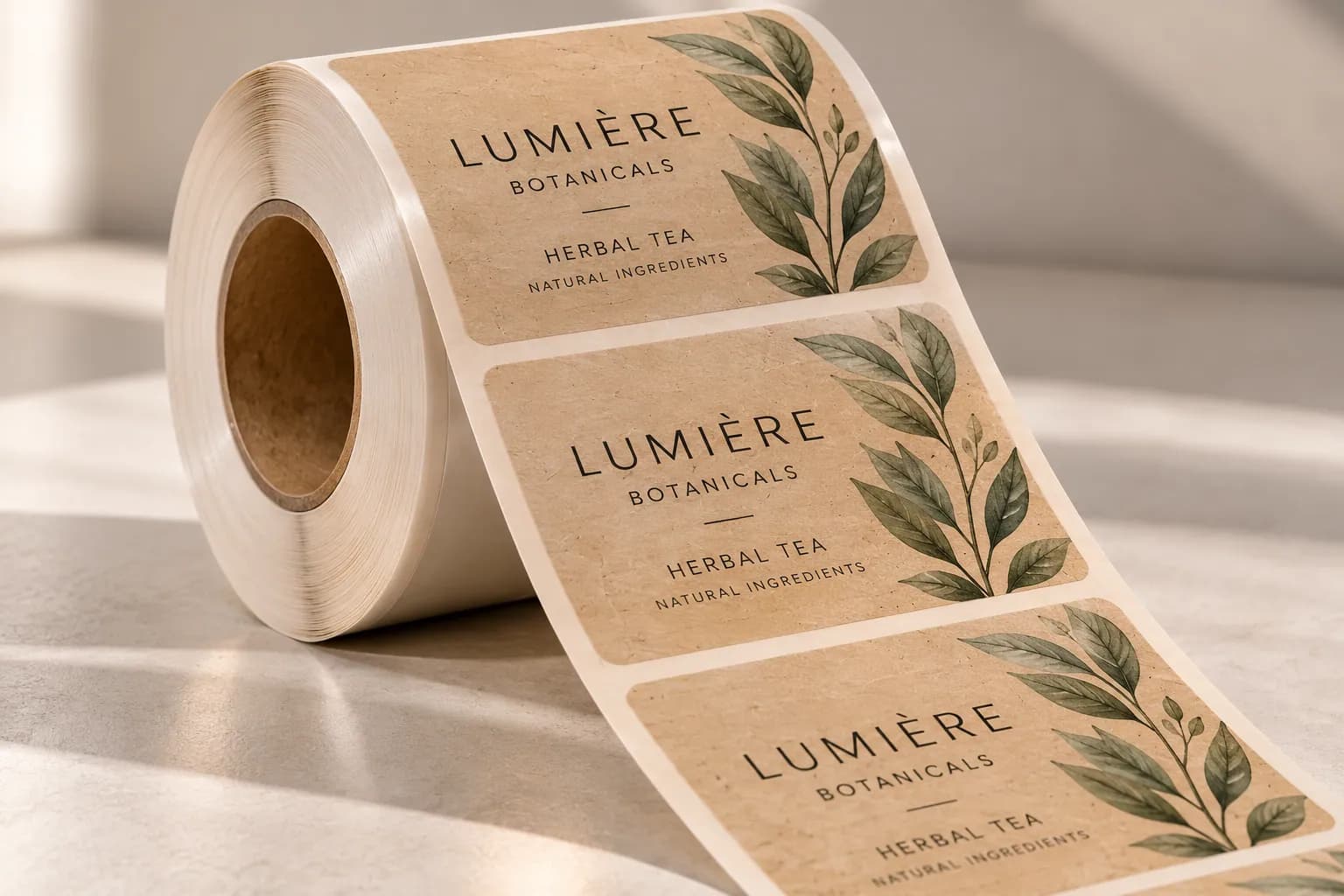
Natural Kraft Paper
Natural Brown · Visible Fiber
A natural brown paper where the visible fiber becomes part of the finished look.
More on Natural Kraft Paper →About these premium papers: Estate #4, Estate #8, Estate #9, Eggshell Felt White and Eggshell Felt Beige have wet-strength properties suited to beverage labeling, but none are waterproof. Natural Kraft Paper’s wet strength has not been confirmed. Lamination, Foil and Spot UV are not offered with any of these six materials through our current configuration.
Wine labels and moisture
For refrigerated bottles
If your wine will be refrigerated or exposed to regular condensation, choose a material designed for moisture exposure. Crystal Clear and White PP are good starting points when water resistance matters.
For ice buckets or prolonged moisture
Ice buckets, prolonged condensation and repeated wet/dry cycles are more demanding than normal refrigeration. Tell us how the bottle will be used and we can help you choose the appropriate material before production.
Textured paper options: Estate #4, Estate #8, Estate #9, Eggshell Felt White and Eggshell Felt Beige have wet-strength properties suited to beverage labeling. Wet strength does not mean waterproof. Natural Kraft has not been confirmed as wet-strength.
Popular wine label sizes and shapes
Most wine bottles use a front label, sometimes paired with a smaller back label, or a single wraparound piece. Custom sizing and die cuts are available too.
Common front-label starting size — 3" × 5"
The most common standalone front labelCommon back-label starting size — 2" × 3"
Ingredients, tasting notes, your storyLarger / wraparound starting size — 6" × 9"
A larger starting size, often used as a single wraparound labelCustom size or shape
Custom shapes & die cutsFinishes for wine labels
Availability depends on the material you choose. Lamination, 2D Foil, 3D Foil, and Spot UV are available on our Everyday & Durable stocks — Textured & Premium Papers (Estate #4, Estate #8, Estate #9, Eggshell Felt White, Eggshell Felt Beige, and Natural Kraft) are intended to be used without lamination, foil, or Spot UV. The calculator above reflects this automatically for whichever material you select.
Lamination
Soft Touch, Gloss, or Matte. Changes how the label feels and reflects light — Matte is a common, understated wine pick.
See it in the calculator ↑2D Foil
A flat metallic accent on specific areas of your design — a popular touch for boutique and private-label bottlings.
See it in the calculator ↑3D Foil
The same metallic finish, raised so the foiled area has texture you can feel — often used on crests, seals, or lettering.
See it in the calculator ↑Spot UV
A glossy, raised clear coating over parts of the design — adds contrast and shine without adding color.
See it in the calculator ↑Front and back labels
Many wineries use two labels on the same bottle: a primary front label for the brand, wine name and vintage, and a smaller back label for details such as varietal information, tasting notes, ingredients or the winery story.
Front and back labels do not have to be the same size or material. If you’re planning a matched set, tell us what you’re producing and we can help make sure the two labels work together before production.
Labeling spirits instead? Wine and spirits bottles often call for different materials and finishes. See Spirits Labels →.
Front label
Brand, wine name, vintage
Back label
Varietal, tasting notes, story
Artwork considerations
Mind the seam on a wraparound label
Keep important text, logos and other critical artwork away from the area where the ends of a wraparound label meet.
Designing for foil or Spot UV
Clean, well-defined artwork generally produces a clearer specialty-finish effect than very fine or low-contrast detail.
Fine detail depends on the material
Very fine type and linework can reproduce differently depending on the paper or film you choose. Semi-Gloss Paper and Matte PVC are good starting points when fine reproduction is important, but we can review the artwork if you're unsure.
You'll always see a proof first
Every order receives a free digital proof before production so you can review the artwork, size and placement before it goes to production.
Wine label FAQ
Ready to see your price?
Configure your wine label above — every material, shape and finish is yours to change.